


At a glance: A water softener removes hardness minerals like calcium and magnesium through a process called ion exchange, which stops scale, spotting, and dry skin. A whole-house filter works differently, because it removes contaminants such as sediment, chlorine, iron, and odor from every tap. Many homes benefit from running both.
Hard water and water quality problems show up in small, daily ways. You might notice spots on clean dishes, a filmy feel on your skin after a shower, rust-colored staining around drains, or a faint sulfur smell when you fill a glass. Softeners and filters both improve home water, but they solve different problems and work in different ways. Knowing which one fits your situation starts with understanding what each system actually does.
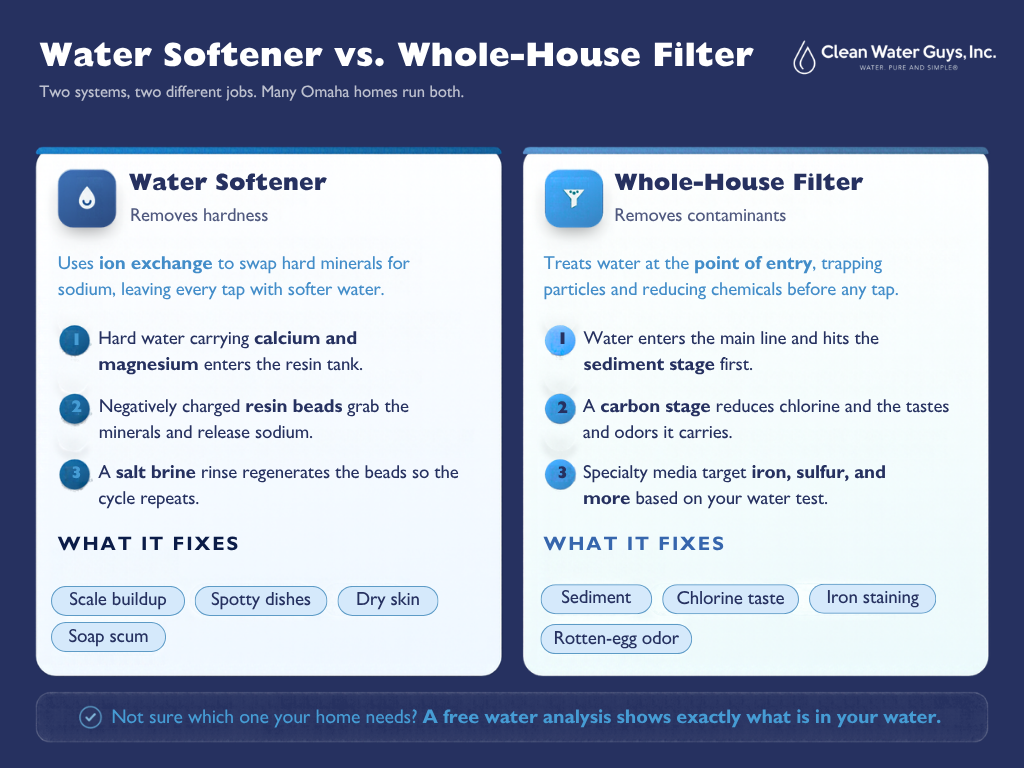
How a Water Softener Works
Hard water carries dissolved minerals, mainly calcium and magnesium, which build up as scale and interfere with soap. A water softener addresses this through ion exchange, a process that swaps those hardness minerals for sodium.
Inside the softener is a tank filled with thousands of tiny resin beads. Each bead carries a negative charge and holds sodium ions. As hard water flows through the resin bed, the calcium and magnesium are drawn to the beads and cling to them, while sodium ions release into the water. The water that leaves the tank is soft, with the hardness minerals left behind on the resin.
Over time the resin fills up with hardness and stops working. That triggers the regeneration process. A brine solution from the brine tank, made from water softener salt such as sodium chloride or potassium chloride, rinses through the resin. The strong salt solution pulls the calcium and magnesium off the beads, flushes them down the drain, and recharges the resin with fresh sodium ions. The system then returns to normal operation. Proper maintenance, mainly keeping salt in the brine tank, is what keeps the cycle running.
What a Water Softener Fixes
Softened water changes things you can see and feel. Common improvements include:
- Scale stops building up inside pipes, water heaters, and other water-using appliances, which helps them last longer.
- Dishes and glassware come out with fewer spots, and tubs and tile collect less soap scum.
- Skin and hair feel softer, since soap lathers and rinses more easily in soft water.
- Laundry comes out cleaner and brighter while using less detergent.
A softener handles hardness well, but it does not remove most other contaminants, which is where filtration comes in.
How a Whole-House Water Filter Works
A whole-house filter treats water at the point where the main line enters your home, which means every tap, shower, and appliance receives filtered water. This is known as point-of-entry treatment.
Instead of exchanging ions, a filter physically traps or chemically reduces contaminants as water passes through one or more media beds. A sediment stage captures sand, silt, and rust particles. A carbon stage reduces chlorine along with the tastes and odors it carries. Specialized media can target iron, manganese, or sulfur. The right combination depends on what a water test finds in your supply, since no single system removes every contaminant.
What a Whole-House Filter Fixes
Filtration targets the problems a softener leaves behind:
- Sediment like sand, silt, and clay gets trapped before it clouds your water.
- Chlorine and the chemical taste or smell it adds are reduced at every tap.
- Iron that causes rust-colored staining on fixtures and laundry is removed.
- Sulfur, the source of a rotten-egg odor, is filtered out.
Clean, filtered water at every tap improves taste, protects fixtures, and makes the whole home more pleasant to live in.
Water Softener vs. Whole-House Filter: The Key Differences
The two systems are easy to confuse, but they do separate jobs:
- A water softener targets hardness. It uses ion exchange to remove calcium and magnesium, and it relies on salt and regeneration to keep working.
- A whole-house filter targets contaminants. It uses physical and carbon media to reduce sediment, chlorine, iron, and odor, and it does not add sodium to the water.
There is also a middle option. A salt-free water conditioner changes how hardness minerals behave so they form less scale, without removing them and without salt. It suits households that want to cut scale while avoiding sodium, though it does not deliver the fully softened water that an ion exchange softener produces.
Which One Does Your Home Need?
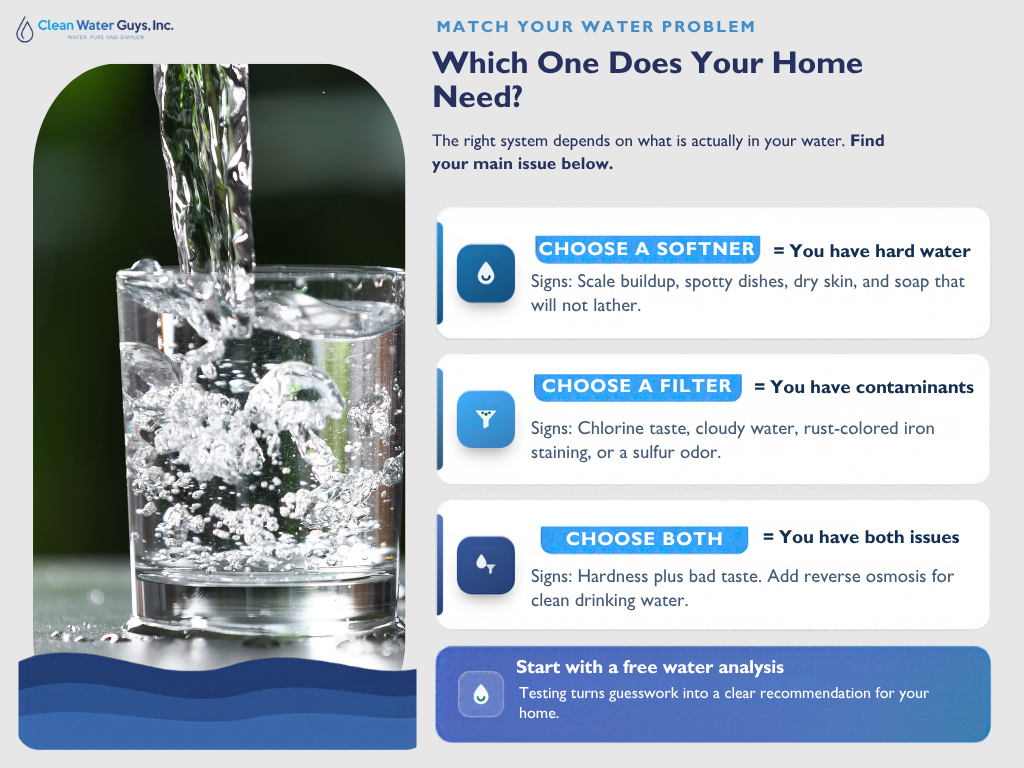
The right answer depends on what is actually in your water. A few common situations point the way:
- If your main complaints are scale, spotting, and dry skin, a softener is usually the priority.
- If you are dealing with chlorine taste, cloudy water, iron staining, or odor, a filter is the better fit.
- If you have both hardness and contaminants, a softener and filter work best together.
- If you want high-purity drinking water at the kitchen tap, you can add a reverse osmosis system alongside either one.
Because hardness and mineral content vary widely across the United States, your local water quality is worth checking before you buy. A professional water analysis measures your hardness and identifies iron, sediment, and other issues, which turns guesswork into a clear recommendation.
Getting Clean Water in Your Omaha Home

A water softener and a whole-house filter are built for different jobs. A softener relies on ion exchange to remove the calcium and magnesium that cause hard water, which cuts down on scale buildup, spotting, and wear on your appliances. A whole-house filter handles what a softener leaves behind, including sediment, chlorine, iron, and sulfur odor. Some homes need one, some need both, and the right setup comes down to what a water test reveals about your supply.
For homeowners across the greater Omaha metro, Clean Water Guys manages whole-home water treatment from the first test to the final install. The process begins with a free water analysis, followed by a showroom visit or an in-home consultation where you see options and pricing without pressure. As a family-owned, 3M authorized dealer with WQA certified installers and more than 10 Best of Omaha wins, the team also stands behind each system with yearly checkups and salt drop-offs when they are in your area. For new builds, the team works directly with your homebuilder to design and install the right system during construction.
The fastest way to know which system your home needs is to have your water tested. Schedule a free water analysis by calling or filling out the online form, then visit the Omaha showroom or book an in-home consultation to compare the options that fit your home and budget.
Frequently Asked Questions
Do I need a water softener, a filter, or both? If your main problem is hard water, a softener is the priority. If you are dealing with chlorine, sediment, iron, or odor, a filter addresses those. Homes with both issues usually run a softener and a whole-house filter together.
Does a water softener remove contaminants like chlorine or iron? Not on its own. A softener is built to remove hardness through ion exchange. Removing chlorine, sediment, heavy iron, or odor calls for filtration.
Is softened water safe to drink? Softened water is safe for most people to drink. It contains a small amount of added sodium from the ion exchange process. Households that prefer lower sodium often add a reverse osmosis system at the kitchen tap for drinking water.
How often does a water softener need salt? It depends on your water hardness and how much water your household uses. Most homes add salt every few weeks to every couple of months. Keeping the brine tank filled is the main maintenance a softener needs.
What is the difference between a water softener and a water conditioner? A water softener removes hardness minerals using salt and ion exchange. A salt-free water conditioner changes the minerals so they form less scale, without removing them and without salt. A conditioner reduces scale but does not produce fully softened water.