


At a glance: You can tell your home has hard water by the marks it leaves behind, including spotty dishes, soap scum on tubs, dry skin, chalky buildup on faucets, and scale inside appliances. A professional water analysis confirms it and measures how hard your water really is.
Hard water is one of the most common water issues in homes across the country, and it rarely announces itself. Instead, it shows up in small, daily frustrations that are easy to blame on old pipes or cheap soap. The real cause is dissolved calcium and magnesium, the minerals that make water hard. Once you know the telltale signs, the pattern becomes hard to miss.
What Causes Hard Water
Water picks up minerals as it moves through soil and rock before it ever reaches your home. In many regions, that means it arrives carrying a high concentration of calcium and magnesium, usually measured as calcium carbonate. As the level of these hardness minerals climbs, the water grows harder, and the problems covered below show up more often.
Hardness is rated on a scale from soft to very hard, measured in grains per gallon or milligrams per liter. Water on the softer end leaves few traces, while harder water deposits minerals on nearly everything it touches. Because the mineral content comes from the natural water supply, the only reliable way to lower it is to treat the water inside your home.
Signs You Have Hard Water
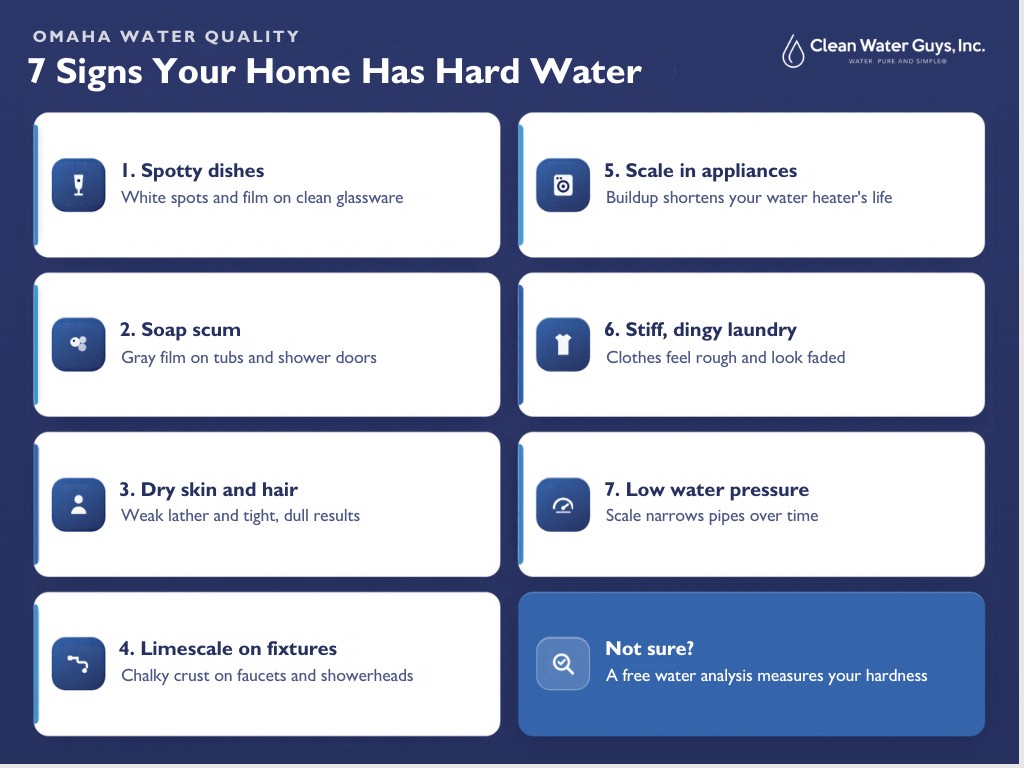
Because hard water comes from minerals you cannot see, you usually recognize it by what it leaves behind. These are the seven signs that show up most often in homes with hard water.
1. Spotty Dishes and Cloudy Glassware
If your glasses come out of the dishwasher dotted with white spots or wearing a cloudy film, hard water is the usual suspect. As the water dries, it leaves mineral residue behind on everything it touched. Rinse aid hides the problem for a cycle or two, but the spots return because the minerals are still in the water. The spots appear on everything after a single wash, since the minerals are left behind on any surface as the water dries. The cloudy haze is different: it builds up over repeated washes at about the same rate everywhere, but clear glass reveals it first because light passes straight through and nothing hides the film.
2. Soap Scum on Tubs and Shower Doors
Hard water minerals react with soap to form a sticky, gray film known as soap scum. It clings to tubs, tile, and glass shower doors, and it comes back no matter how often you scrub. That constant residue is the mineral content in your water bonding with the soap instead of rinsing cleanly away. A bathroom that never looks clean for long is a strong sign.
3. Dry Skin, Dull Hair, and Weak Lather
Soap and shampoo depend on a good lather to clean, and hard water fights that. The same minerals that create soap scum keep soap from lathering and leave a thin residue on your skin and hair. The result is skin that feels dry and tight after a shower and hair that looks flat or dull. People with sensitive skin tend to notice the difference first and most.
4. Chalky Limescale on Faucets and Showerheads
Look closely at your faucets, showerheads, and aerators. White, crusty mineral deposits, often called limescale, are a classic marker of hard water. The same chalky residue that collects on the outside also clogs the small holes inside a showerhead, which is why the spray can turn uneven or weak. Scrub it off and it returns within days, because every run of hard water leaves a fresh layer of limescale behind.
5. Dropping Water Pressure
When mineral buildup narrows the inside of your pipes and clogs aerators and showerheads, water flow suffers. A slow, steady drop in water pressure across the house is a sign that scale is collecting where you cannot reach it. This one develops gradually, so it is easy to overlook until a faucet or shower feels noticeably weaker than it used to.
6. Scale Inside Your Appliances
The limescale you see on fixtures also forms where you cannot see it, inside your water-using appliances. It coats the heating element in your water heater and builds up in dishwashers and washing machines, forcing them to work harder and use more energy. A water heater fighting a layer of scale takes longer to heat and costs more to run. Over time that limescale buildup shortens the life of equipment you expect to last for years. This makes hard water an expensive problem to ignore.
7. Stiff, Dingy Laundry
Hard water minerals also bind to fabric during the wash, leaving clothes stiff, scratchy, and faded. Whites turn gray, colors lose their brightness, and towels lose their fluff. Many people respond by adding more laundry detergent, which treats the symptom without fixing the cause. If your laundry never feels soft no matter what you pour in, your water supply may be the reason.
How to Tell for Sure
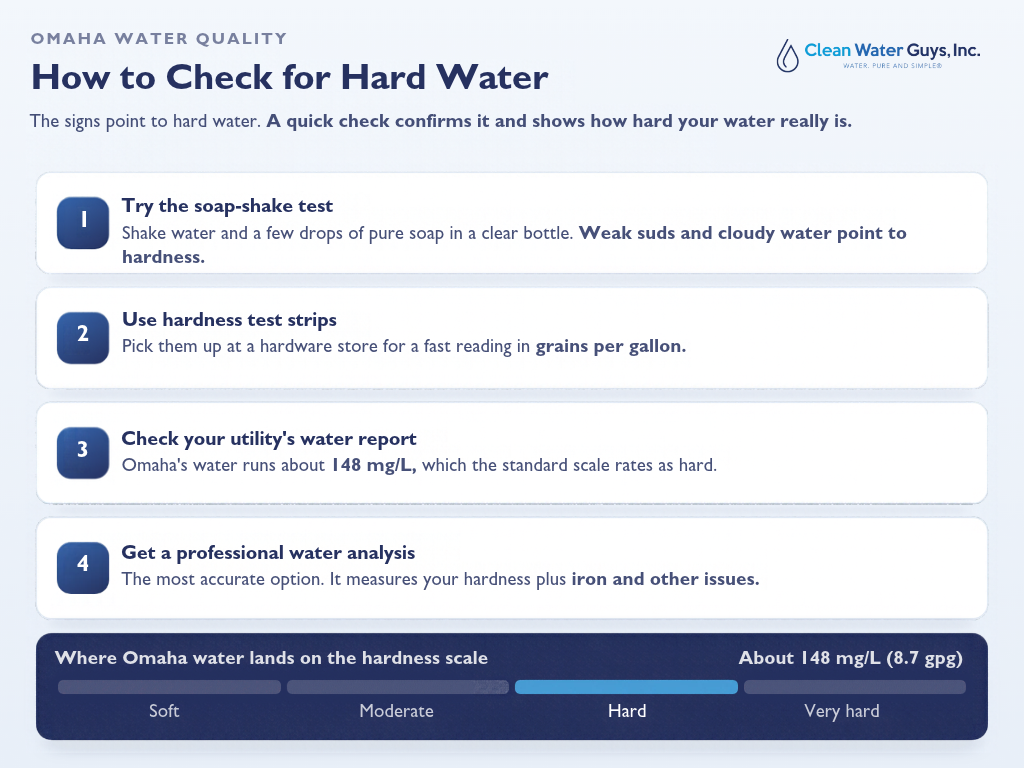
The signs above point to hard water, but a quick check confirms it and tells you how hard your water actually is:
- Try the soap-shake test. Fill a clear bottle partway with water, add a few drops of pure liquid soap, and shake. Weak suds and cloudy water suggest hardness.
- Pick up hardness test strips from a hardware store. This gives you a fast reading in grains per gallon.
- Check your utility’s annual water report. Omaha’s water measures hardness at about 148 milligrams per liter, roughly 8.7 grains per gallon, which the standard scale classifies as hard.
- Schedule a professional water analysis for the most accurate result. It measures your hardness level along with iron, scale-causing minerals, and anything else in your supply.
A test turns a hunch into a number, and that number tells you how much treatment your home needs.
Fixing Hard Water in Your Omaha Home
If the signs sound familiar, you are not stuck with them. A water softener removes hardness through ion exchange, swapping the calcium and magnesium for sodium so soft water reaches every tap. Salt-free conditioners and reverse osmosis drinking systems offer other options depending on what your water needs.
Clean Water Guys is a family-owned company serving homeowners across the greater Omaha metro. As a 3M authorized dealer with WQA certified installers and more than 10 Best of Omaha wins, our team fits softeners, whole-home filtration, and reverse osmosis to your home, and backs every install with responsive customer service, yearly checkups, and salt drop-offs.
The first step to fixing hard water in your home is a simple test. Schedule a free water analysis by calling or filling out our online form, then visit the Omaha showroom or book an in-home consultation to see which system fits your home and budget.
Frequently Asked Questions
How do I know if I have hard water? Watch for spotty dishes, soap scum on tubs, chalky buildup on faucets, dry skin, and stiff laundry. A hardness test strip from a hardware store or a professional water analysis confirms it and measures how hard your water is.
Is hard water bad for your health? Hard water is safe to drink. The calcium and magnesium that cause it are not health risks. The problems it creates are practical ones, including scale, soap scum, and wear on appliances, rather than medical ones.
Is Omaha water hard? Yes. Omaha’s water measures hardness at about 148 milligrams per liter, roughly 8.7 grains per gallon, which rates as hard. That is why scale and spotting are common complaints across the metro.
Does hard water damage appliances? It can shorten their life. Scale builds up on the heating element in your water heater and inside dishwashers and washing machines, which makes them work harder, use more energy, and wear out faster.
How do you get rid of hard water? A salt-based water softener is the most common fix, since it removes the hardness minerals through ion exchange. A free water analysis measures your hardness level and shows whether a softener, a conditioner, or a combination suits your home.